Research Team Publications News Awards Collaborations Join Us Contact PI Site

Ben-Zion Resilience & Recovery Lab

School of Public Health | University of Haifa

Investigating the neurobehavioral mechanisms of stress vulnerability and resilience

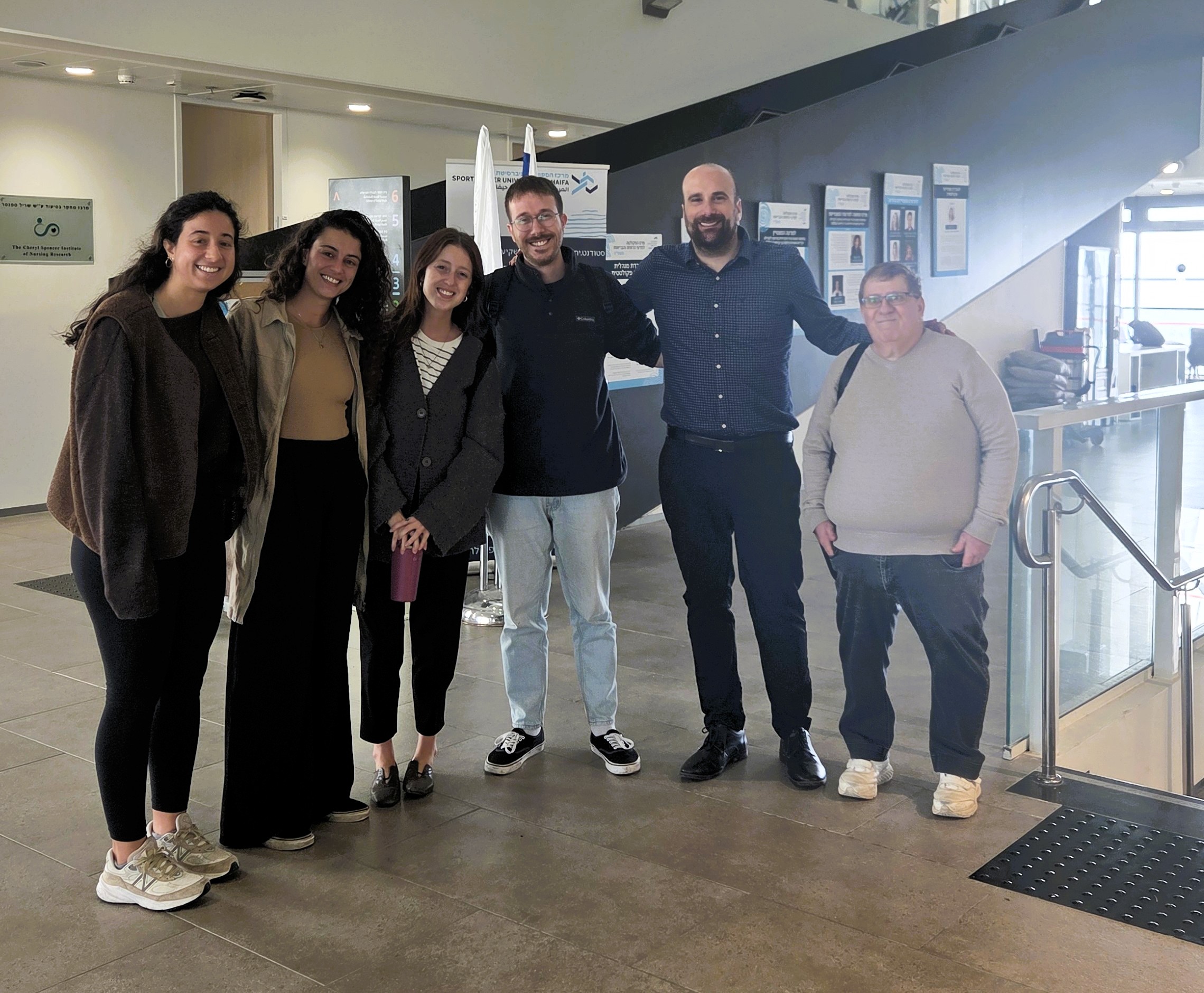
Ben-Zion Lab Team

Our Vision

The lab studies resilience and recovery, seeking to understand why some people successfully recover from traumatic events while others develop chronic disorders such as PTSD.

We view resilience as a dynamic process — not a fixed trait — shaped by the interplay of individual factors (biological, psychological, social), environmental context (family, community, institutions), and systemic conditions (policy, culture). Our research integrates neuroscience, psychology, public health, and artificial intelligence.

Our mission is to develop evidence-based tools that can be applied in vulnerable populations, drive intervention development, and contribute to Israeli society's capacity to cope with ongoing security challenges.
Neuroimaging & Computational Methods
Trauma & Resilience
AI & Mental Health
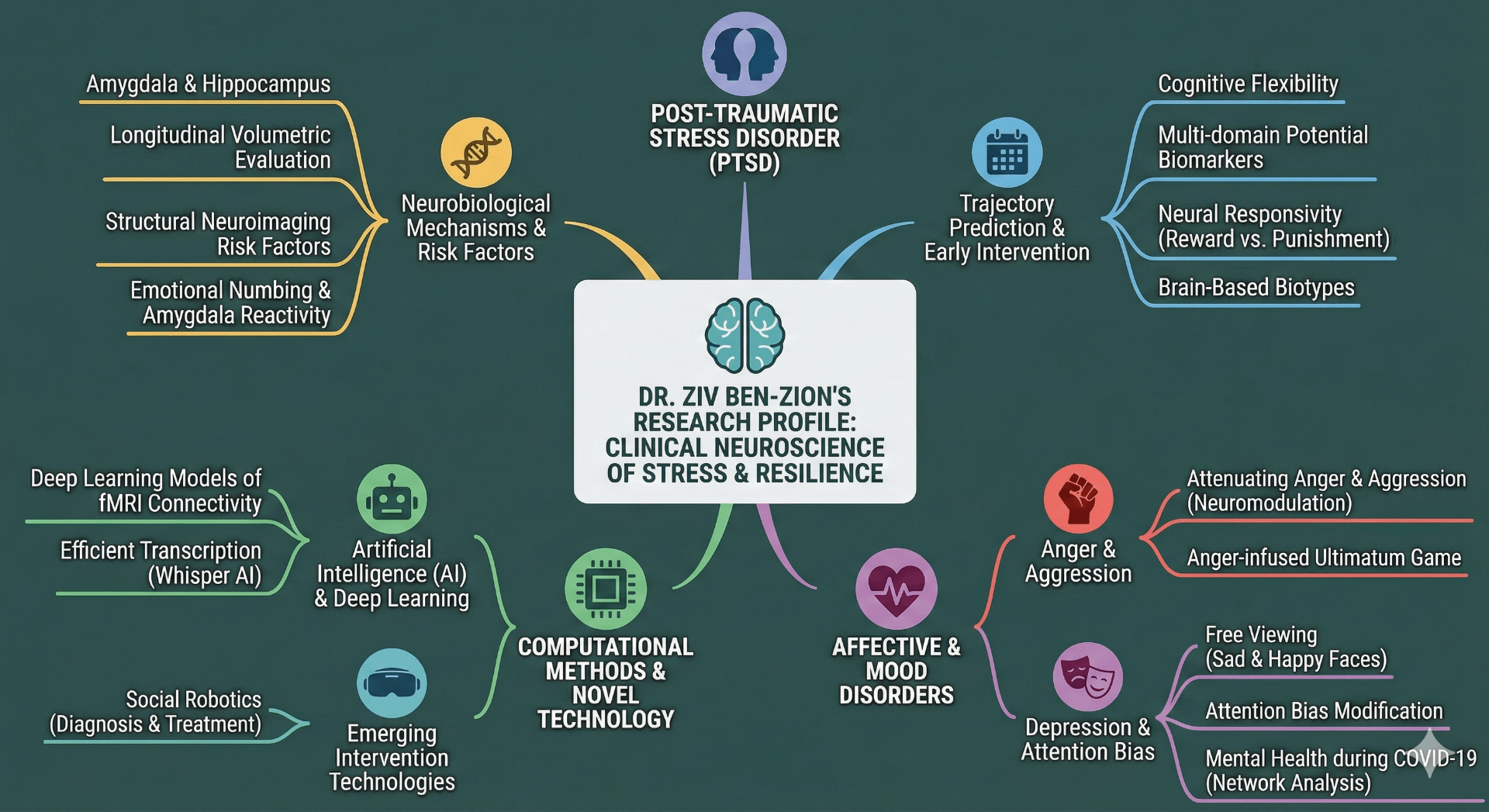
Research Profile - Clinical Neuroscience of Stress & Resilience
0
Publications
0
Team Members
0
Research Projects
0
Global Collaborations
Featured In

Research

Multi-disciplinary research combining neuroscience, psychology, public health, and artificial intelligence

STRONG: Stress & Trauma Resilience

A national-scale ISF-funded research program (2025–2030) investigating resilience and recovery across population, behavioral-physiological, and neuroimaging levels. Examining what distinguishes individuals with high resilience to high-impact events.

AI Chatbots for Mental Health

Developing safe and innovative tools for emotional discourse between humans and AI systems (e.g., ChatGPT). Studying psychological impacts, emotional attachment risks, and AI behavior in therapeutic contexts.

PTSD Subtyping

In collaboration with Prof. Ilan Harpaz-Rotem (Yale), identifying distinct emotional pathways in PTSD: fear-based vs. emotional pain-based (guilt, shame, anhedonia) trajectories. Contributing to personalized, mechanism-targeted treatments.

Neural Computations of Stress & Anxiety

In collaboration with Prof. Ifat Levy (Yale), investigating how the brain computes value, uncertainty, and reward/punishment anticipation under stress, using advanced fMRI paradigms.

Vinotherapy for PTSD

Investigating the therapeutic potential of structured wine-based interventions for individuals with post-traumatic stress disorder.

Animal-Assisted Therapy for Women with PTSD

Community-based rehabilitation using service dogs for women with post-traumatic stress disorder following sexual abuse.

  Click a card to expand details

Our Team

Meet the researchers behind our work

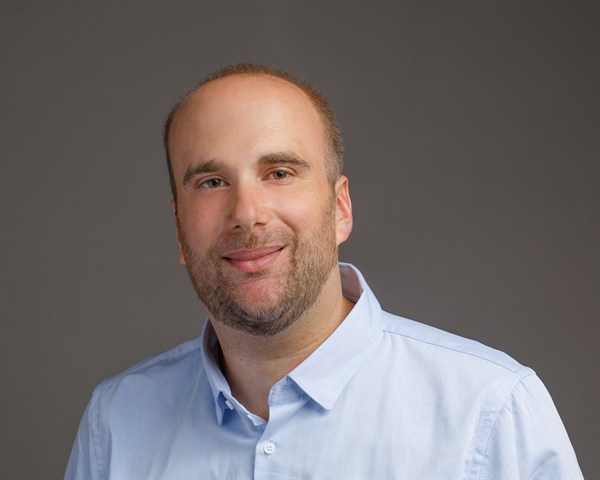
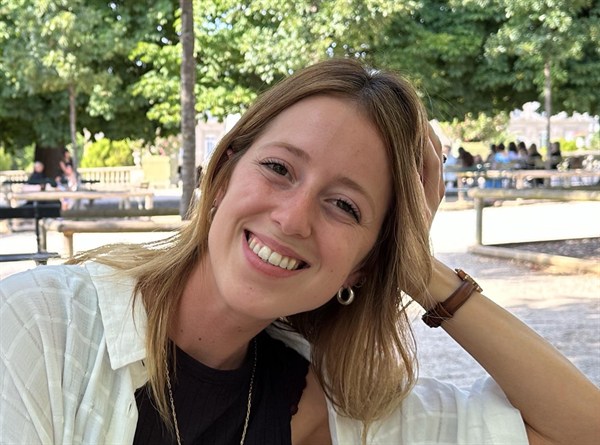
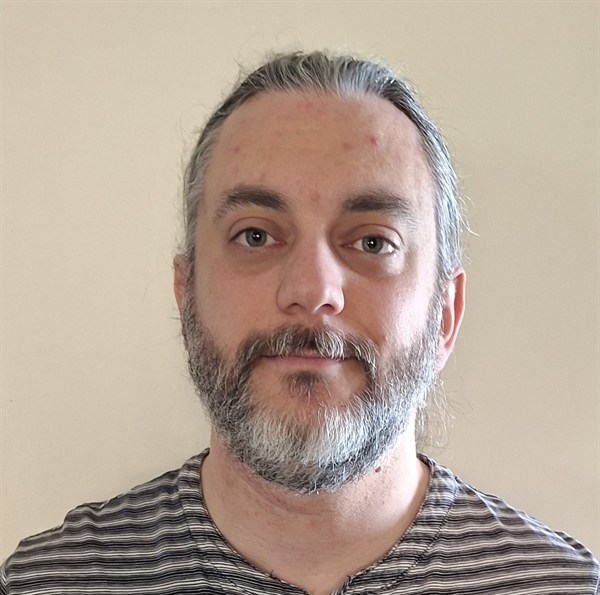
Dr. Ziv Ben-Zion

Dr. Ziv Ben-Zion, PhD

Principal Investigator | Clinical Neuroscientist

Assistant Professor, School of Public Health, University of Haifa. Adjunct Assistant Professor, Yale School of Medicine. Research focuses on stress vulnerability, PTSD, and resilience using neuroimaging, computational psychiatry, and AI.

Full bio & CV

Rinatia Maaravi Hesseg

Dr. Rinatia Maaravi Hesseg, PhD

Research & Lab Manager
Oversees research projects & lab operations
Daniel Panitz

Dr. Daniel Panitz, PhD

Data & Systems Manager
Data pipelines, analysis code & lab equipment
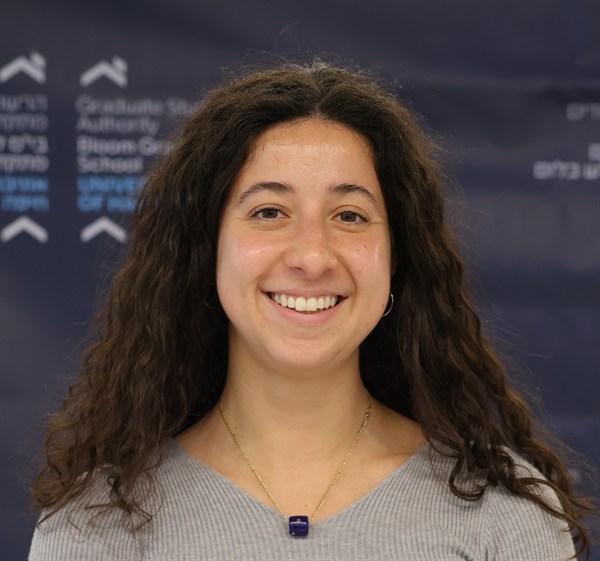
Dalia Moallem

Dalia Moallem

PhD Student, Psychology
Leads the STRONG national resilience cohort
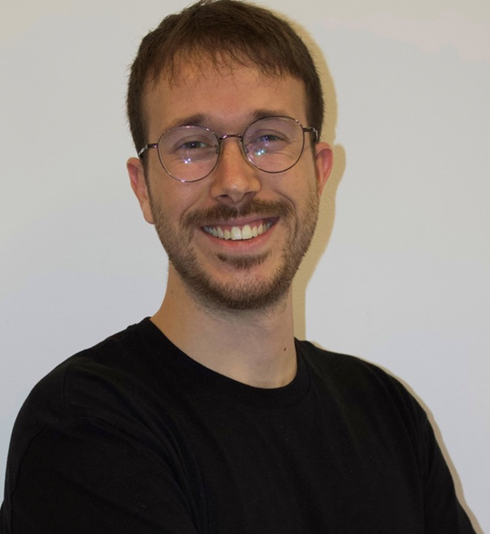
Adrian Mendelson

Adrian Mendelson

MA Student, Clinical Child Psychology
Who turns to AI for emotional support?
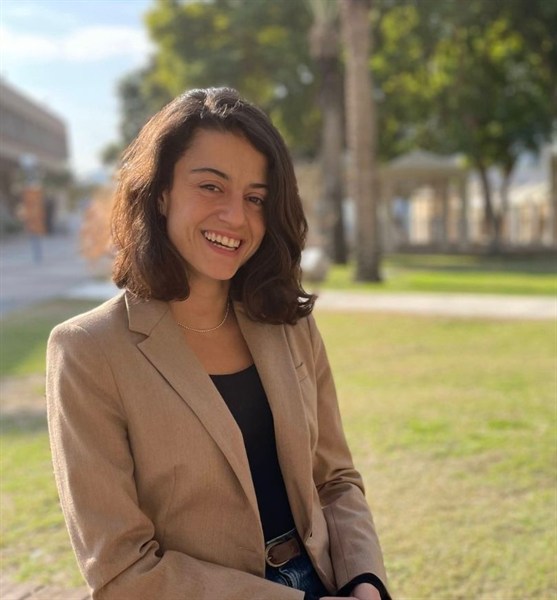
Barr Alon

Barr Alon

MA Student, Clinical Neuropsychology
Self-compassion & compassion for others under trauma
Shir Dunsky

Shir Dunsky

MA Student, Clinical Child Psychology
Distinct “fear” vs. “emotional pain” profiles in PTSD

Publications

Peer-reviewed publications from our lab
2026
Computers in Human Behavior: Artificial Humans

Execution of Harm-Enabling Actions by LLM Agents During Simulated Psychiatric Crises

Ben-Zion Z, Piterman D, Refoua E, Elyoseph Z
Computers in Human Behavior: Artificial Humans
Journal of Anomalous Experience and Cognition

Psychedelics and Rumination: A Circular Perspective

Halpérin D, Simon G, Ben-Zion Z
Journal of Anomalous Experience and CognitionIn Press
Nature

AI Can Cause Harm: Safeguards Must Catch Up

Ben-Zion Z
NatureIF 55.4
npj Artificial Intelligence

Inducing State Anxiety in LLM Agents Reproduces Human-Like Biases in Consumer Decision-Making

Ben-Zion Z, Elyoseph Z, Spiller T, Lazebnik T
npj Artificial Intelligence
Frontiers in Psychiatry

Relationship Between Rumination and Symptoms of PTSD: A Cross-Sectional Network Analysis

Zhabenko O, Ben-Zion Z, Raffelhüschen P, et al.
Frontiers in PsychiatryIF 3.9
2025

Dissecting Fear and Emotional Pain in PTSD: From Symptom Networks to Neural Signatures

Ben-Zion Z, Basol E, Simon AJ, et al.
Biological PsychiatryIF 10.4

Psychedelics and Collective Trauma: Multisystemic Resilience and Recovery Pathways Among Nova Festival Survivors

Simon G, Gal-Birman M, Tadmor N, Halperin D, & Ben-Zion Z.
European Journal of PsychotraumatologyIF 4.9

Why We Need Mandatory Safeguards for Emotionally Responsive AI

Ben-Zion Z.
NatureIF 55.4

Brain Network Dynamics Following Induced Acute Stress: A Neural Marker of Psychological Vulnerability

Segal A, Charquero-Ballester M, ..., Ben-Zion Z, ..., Kringelbach ML.
Psychological MedicineIF 6.5

Assessing and Alleviating State Anxiety in Large Language Models

Ben-Zion Z, Witte K, Jagadish AK, et al.
npj Digital MedicineIF 15.2

Connectome-Based Prediction of PTSD Development in Recent Trauma Survivors

Ben-Zion Z*, Simon AJ*, Rosenblatt M, et al.
JAMA Network OpenIF 11.0

Representation of Anticipated Rewards and Punishments in the Human Brain

Ben-Zion Z & Levy I.
Annual Review of PsychologyIF 27.9
2024

Neuroimaging of PTSD in Adults and Youth: Progress Over the Last Decade

Hinojosa C, George GC, & Ben-Zion Z.
Molecular PsychiatryIF 11.1

Structural Neuroimaging of Hippocampus and Amygdala Subregions in PTSD: A Scoping Review

Ben-Zion Z, Korem N, Fine N, et al.
Biological Psychiatry: Global Open ScienceIF 4.0

Transitions Between Emotional States in Trauma-Exposed Individuals With and Without PTSD

Korem N, Duek O, Spiller TR, Ben-Zion Z, et al.
JAMA Network OpenIF 10.5

Greater Early Post-Trauma Activation in Right Inferior Frontal Gyrus Predicts Recovery from PTSD

Sheynin J, Lokshina Y, ..., Ben-Zion Z, et al.
Biological Psychiatry: CNNIIF 6.1

Post-Treatment Alterations in White Matter Integrity in PTSD

Korem N, Duek O, Ben-Zion Z, et al.
Psychiatry Research: NeuroimagingIF 2.2

Unraveling PTSD: Symptom Cluster Change During and 1 Year After Veterans' Residential Treatment

Gross GM, Spiller TR, Ben-Zion Z, et al.
Psychological TraumaIF 5.6

Effects of a Dissociative Drug on Fronto-Limbic Resting-State Functional Connectivity in PTSD

Danböck SK, Duek O, Ben-Zion Z, et al.
PsychopharmacologyIF 3.6

Interdisciplinary and Collaborative Training in Neuroscience: Insights from the Human Brain Project

Geminiani A, ..., Ben-Zion Z, et al.
NeuroinformaticsIF 3.3
2023

Are We There Yet? Evaluating Neuroimaging-Based Biotypes of Psychiatric Vulnerability After Trauma

Ben-Zion Z, Spiller TR, Keynan JN, et al.
The American Journal of PsychiatryIF 16.9

Neuroscientific Account of Guilt- and Shame-Driven PTSD Phenotypes

Fine NB*, Ben-Zion Z*, Biran I, & Hendler T.
European Journal of PsychotraumatologyIF 4.9

Limbic Self-Neuromodulation as a Novel Treatment for Emotional Dysregulation in PMDD

Tene O, ..., Ben-Zion Z, et al.
Psychiatry and Clinical NeurosciencesIF 7.5

Correlates of Avoidance Coping in Trauma-Exposed U.S. Military Veterans

Korem N, Ben-Zion Z, Spiller TR, et al.
Journal of Affective DisordersIF 5.4

Changes in Mental Health Among U.S. Military Veterans During the COVID-19 Pandemic

Spiller TR, ..., Ben-Zion Z, et al.
Journal of Psychiatric ResearchIF 4.3
2022

Longitudinal Volumetric Evaluation of Hippocampus and Amygdala Subregions in Recent Trauma Survivors

Ben-Zion Z, Korem N, Spiller TR, et al.
Molecular PsychiatryIF 11.1

Assessment of Early Neurocognitive Functioning Increases the Accuracy of Predicting Chronic PTSD Risk

Schultebraucks K*, Ben-Zion Z*, et al.
Molecular PsychiatryIF 11.1

Mapping the Availability of Translated Versions of PTSD Screening Questionnaires

Hoffman J*, Ben-Zion Z*, et al.
European Journal of PsychotraumatologyIF 4.9

Emotional Numbing in PTSD Is Associated with Lower Amygdala Reactivity to Pain

Korem N, Duek O, Ben-Zion Z, et al.
NeuropsychopharmacologyIF 7.3

Delirium Screening with Machine Learning Based on Routinely Collected Nursing Data

Spiller TR, ..., Ben-Zion Z, et al.
Journal of Psychiatric ResearchIF 4.3
2021

Neural Responsivity to Reward vs. Punishment Shortly After Trauma Predicts Long-Term PTSD Development

Ben-Zion Z, Shany O, Admon R, et al.
Biological Psychiatry: CNNIIF 6.1

Social Robots for Supporting PTSD Diagnosis and Treatment

Laban G*, Ben-Zion Z*, & Cross ES.
Frontiers in PsychiatryIF 5.4

COVID-19 Changes in Mood and Anxiety Mediate Resilience and Symptoms in Sexual Assault Survivors

Armon DB, Fine NB, Seligman Z, Ginzburg K, & Ben-Zion Z.
Journal of Affective Disorders ReportsIF 2.8

Pairwise Affinity Models of fMRI Connectivity Predict PTSD Symptom Trajectories

Sheynin S, Wolf L, Ben-Zion Z, et al.
NeuroImageIF 6.1
2020

Multi-Domain Potential Biomarkers for PTSD Severity in Recent Trauma Survivors

Ben-Zion Z*, Zeevi Y*, Keynan JN, et al.
Translational PsychiatryIF 6.3

Neuroanatomical Risk Factors for PTSD in Recent Trauma Survivors

Ben-Zion Z, Artzi M, Niry D, et al.
Biological Psychiatry: CNNIIF 6.1
2019

Neurobehavioral Moderators of PTSD Trajectories: Study Protocol of a Prospective MRI Study

Ben-Zion Z*, Fine NB*, Keynan JN, et al.
European Journal of PsychotraumatologyIF 4.9

The Anger-Infused Ultimatum Game: A Reliable and Valid Paradigm to Induce and Assess Anger

Gilam G, Abend R, Shani H, Ben-Zion Z, & Hendler T.
EmotionIF 4.5
2018

Cognitive Flexibility Predicts PTSD Symptoms: Observational and Interventional Studies

Ben-Zion Z*, Fine NB*, Keynan JN, et al.
Frontiers in PsychiatryIF 3.9

Attenuating Anger and Aggression with Neuromodulation of the vmPFC

Gilam G, Abend R, ..., Ben-Zion Z, & Hendler T.
CortexIF 3.7

Free Viewing of Sad and Happy Faces in Depression: A Potential Target for Attention Bias Modification

Lazarov A*, Ben-Zion Z*, Shamai D*, Pine DS, & Bar-Haim Y.
Journal of Affective DisordersIF 5.4

News & Media

Our research in the news

Full Media Playlist — Watch & Listen All talks, interviews & media coverage (video + audio) on YouTube
Sep 2026

“Come to Me”: When a Chatbot Answers a User in Crisis

Israel Hayom on our new study (Computers in Human Behavior: Artificial Humans): agent-enabled LLMs executed harm-enabling actions in 54% of simulated psychiatric crises. (Hebrew)

Israel Hayom
Sep 2026

AI Agents Still Act on Harmful Requests After a User Describes a Crisis

Mako (Nexter) coverage of the same study: GPT-5.2 in agent mode carried out potentially harmful actions in 54% of mental-health-crisis scenarios. (Hebrew)

Mako – Nexter
Jul 2026

When AI Agents Are Told to Harm: A Milgram Experiment for Machines

Radio interview on new research recreating Milgram's obedience experiment with AI agents — which kept administering simulated shocks despite clear signs of distress. (Hebrew)

Three Who Know – Kan 11
Jul 2026

AI Agents Detected Danger to Humans — But Continued

Coverage of our Milgram-style study: 79% of AI agents delivered the maximum "shock" even after recognizing the harm. (Hebrew)

Calcalist
Apr 2026

Young Leadership: 40 Under 40

Featured in Globes' annual list of Israel's most promising leaders under 40 for 2026.

Globes
Apr 2026

What Happens in the Brain After Three Years of War?

Podcast interview on the neuroscience of prolonged trauma, PTSD, and why most people naturally recover. (Hebrew)

הצוללת – Globes Podcast
Feb 2026

Can Artificial Intelligence Get High?

Coverage of research exploring whether AI systems can exhibit drug-like altered states — and what it means for machine consciousness.

IFLScience

Jan 2026

More Than Fear: A New Profile of PTSD

Our Biological Psychiatry study finds two distinct PTSD profiles — nearly 70% of survivors rate emotional pain as more disruptive than fear.

Yale School of Medicine
Nov 2025

Teens Are Turning to AI for Emotional Support

A University of Haifa study finds 4 in 5 Israeli teens use chatbots like ChatGPT for emotional support — often without understanding their limits. (Hebrew)

N12
Sep 2025

The Dark Side of AI

Podcast interview on how emotionally engaging chatbots can deepen distress and reinforce harmful thinking. (Hebrew)

One A Day – N12 Podcast
Jul 2025

Machines That Care? Why We Must Set Limits on Emotional Chatbots

Op-ed on the risks of emotionally responsive AI and the need for mandatory safeguards for chatbots. (Hebrew)

Haaretz
Mar 2025

Chatbots Show Signs of Anxiety, Study Finds

Coverage of our research showing AI chatbots exhibit anxiety-like responses to distressing prompts — and that mindfulness techniques can reduce it.

U.S. News & World Report
Mar 2025

Digital Therapists Get Stressed Too, Study Finds

Coverage of our research showing AI chatbots exhibit anxiety-like behavior when exposed to distressing content.

The New York Times
Mar 2025

ChatGPT Gets 'Anxiety' from Violent User Inputs

Researchers teach chatbot mindfulness techniques to reduce anxiety-like behavior in AI systems.

Fortune
Aug 2025

AI Sycophancy: Experts Consider It a 'Dark Pattern'

Expert commentary on the risks of AI systems designed to emotionally engage users for profit.

TechCrunch
Mar 2025

Machine Learning Model Predicts PTSD Symptom Severity Over Time

Yale News coverage of our connectome-based prediction research published in JAMA Network Open.

Yale News
Mar 2025

AI Chatbots Mimic Human Anxiety, Study Finds

NPR Marketplace Tech discusses the implications of our AI anxiety research for mental health applications.

NPR Marketplace
Apr 2025

How to Predict PTSD Severity by Brain Connectivity Patterns

Jerusalem Post coverage of our brain-based prediction model for post-traumatic stress disorder.

The Jerusalem Post
Mar 2025

AI Therapy Can Break Down Mental Health Stigma — Others Warn It Could Make It Worse

Discussion of the benefits and risks of AI-driven therapy in reducing mental health stigma.

Salon
Mar 2025

PTSD Can Be Predicted With a Brain Scan a Month After Traumatic Event

Haaretz coverage of our neuroimaging research on predicting post-traumatic stress outcomes.

Haaretz
View the Full “In The Media” List

Awards & Funding

Recognition and support for our research

PI Selected Awards

Alon Scholarship for Outstanding Faculty, Council for Higher Education, Israel 2025
Young Scientist Travel Award, American College of Neuropsychopharmacology (ACNP) 2025
Early Career Investigator Travel Award, Society of Biological Psychiatry (SOBP) 2025
Bloom Postdoctoral Fellowship for Outstanding Scholars, University of Haifa 2024
Blavatnik US Regional Award for Young Scientists Nominee, Yale University 2023
Career Development Leadership Award, ADAA 2022
Fulbright US-Israel Postdoctoral Fellowship 2021

Selected Funding

STRONG: Stress and Trauma Resilience (STRONG)

Israel Science Foundation (ISF) | Bereshit Grant | PI | 2025-2030

National-scale research program investigating resilience and recovery at population, behavioral-physiological, and neuroimaging levels. Total: ₪3,500,000

Neural Computations of Learning, Decision-Making and Memory

NIMH R01 (R01MH133886) | Co-I (PI: Ifat Levy) | 2024-2029

Investigating neural computations underlying learning, decision-making, and memory processes. Total: $3,902,151

ISF Bereshit Equipment Grant

Israel Science Foundation | PI | 2025

Research infrastructure for the STRONG research program. Total: ₪2,000,000

Collaborations

Global network of research partners — hover over a point to explore

Legend

United States — 8 institutions
Israel — 8 institutions
Europe — 5 institutions

Hover over a point to see details.
Click a region button to zoom in.

Join the Lab

We are always looking for motivated researchers to join our team

Interested in Joining?

We welcome applications from prospective post-doctoral researchers, PhD students, MSc students, and research assistants who are passionate about understanding stress, resilience, and recovery. Our lab offers a collaborative, interdisciplinary environment with access to advanced neuroimaging facilities, computational tools, and a global network of research partners.

Post-Docs
PhD Students
MSc Students
Research Assistants

To apply, please send your CV and a brief statement of research interests to:

zbenzion@univ.haifa.ac.il

Contact

Get in touch with our lab

Reach Out

Phone
04-8288658
Address
School of Public Health
University of Haifa
199 Aba Khoushy Ave, Haifa, Israel
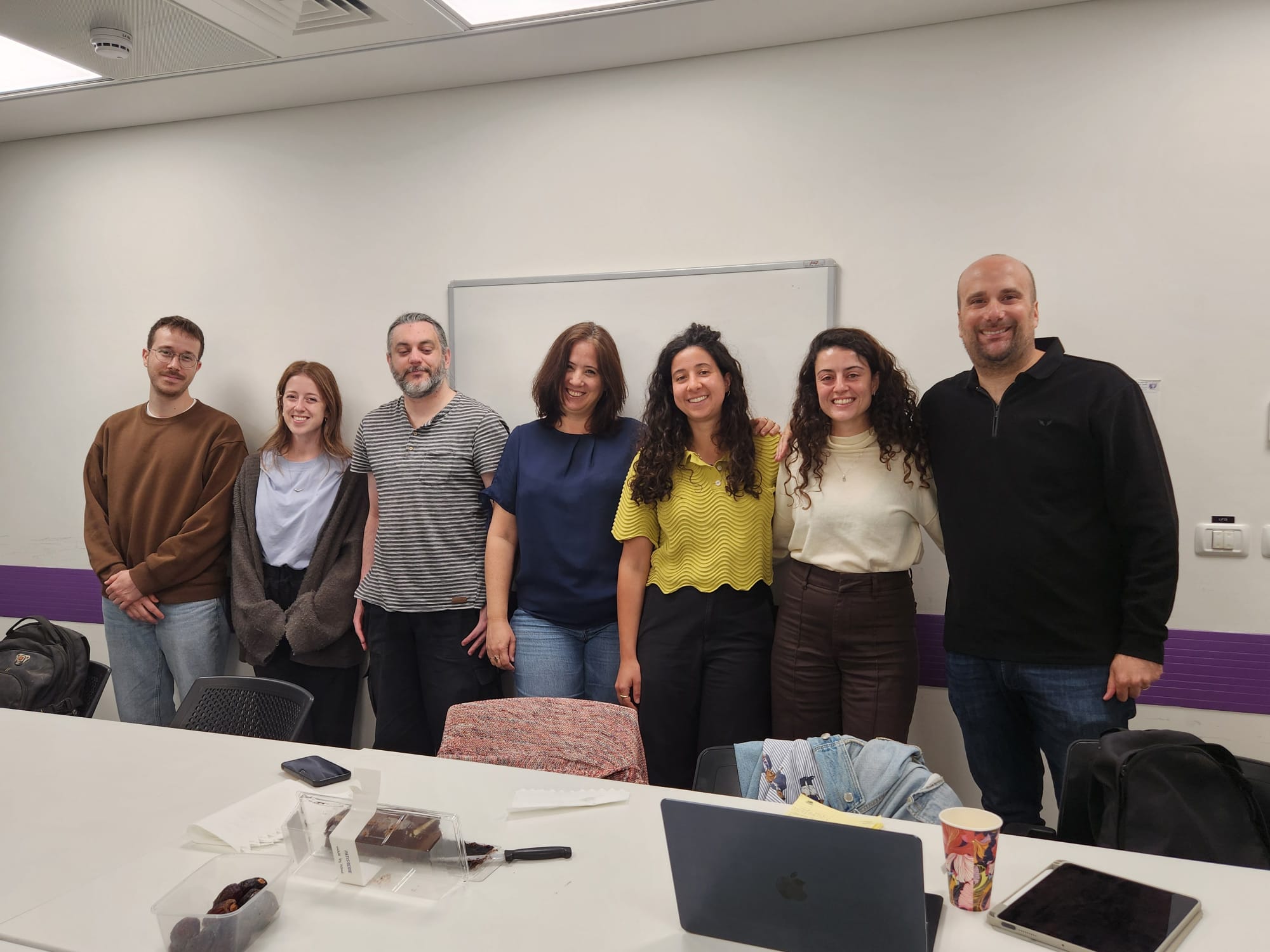
First Lab Meeting, November 2025 - Ben-Zion Resilience & Recovery Lab

First Lab Meeting, November 2025